Blog

  • Soil Testing Services in Bangalore for Construction

    Bangalore known as India’s Silicon Valley, has witnessed rapid urban development over the past two decades. From independent houses and apartments to commercial complexes, IT parks, roads, and industrial facilities, construction activity is booming across the city and its outskirts. However, beneath every successful structure lies an often-overlooked but absolutely critical factor: soil condition.

    Soil testing services in Bangalore play a vital role in ensuring the safety, durability, and cost-effectiveness of construction projects. Due to Bangalore’s varied geology—ranging from red lateritic soil to clayey and rocky strata—soil properties can change significantly even within short distances. Without proper soil investigation, construction can face issues such as foundation failure, cracks, uneven settlement, and excessive maintenance costs.

    This article provides a comprehensive overview of soil testing services in Bangalore for construction, including their importance, types of tests, procedures, benefits, costs, and how to choose the right soil testing agency.


    Importance of Soil Testing Before Construction

    Soil testing is not just a formality—it is a mandatory engineering process for safe construction. The results of soil investigation directly influence foundation design, structural stability, and overall project feasibility.

    Key Reasons Why Soil Testing Is Essential

    1. Determines Soil Bearing Capacity
      The bearing capacity of soil indicates how much load the soil can safely support. This data helps engineers decide the type and depth of foundation required.
    2. Prevents Structural Failures
      Poor soil conditions can lead to settlement, tilting, cracks, and even collapse. Soil testing minimizes these risks.
    3. Optimizes Construction Cost
      Over-designing foundations due to lack of soil data can increase costs, while under-designing can cause long-term damage. Soil testing ensures economical and safe design.
    4. Complies with Building Regulations
      Most municipal authorities and structural consultants in Bangalore require soil test reports before approving construction plans.
    5. Identifies Problematic Soil Conditions
      Expansive clay, loose sand, high groundwater levels, or filled soil can be identified early through testing.

    Soil Conditions Commonly Found in Bangalore

    Bangalore’s soil profile is diverse due to its geological formation. Common soil types include:

    • Red Soil – Predominantly lateritic, good bearing capacity when compacted.
    • Clayey Soil – Expansive in nature; can swell and shrink with moisture changes.
    • Sandy Soil – Found in certain pockets; low cohesion and prone to settlement.
    • Gravelly Soil – Good drainage and moderate bearing capacity.
    • Rocky Strata – Granite bedrock is common at varying depths.

    Due to this variation, soil testing services in Bangalore are crucial even for small residential projects.


    Types of Soil Testing Services in Bangalore

    Soil testing for construction generally includes field tests, laboratory tests, and geotechnical analysis.

    1. Field Soil Tests

    These tests are conducted directly at the construction site.

    Standard Penetration Test (SPT)

    • Most common test in Bangalore
    • Determines soil density and strength
    • Conducted in boreholes at different depths

    Borehole Drilling

    • Soil samples collected from various depths
    • Helps identify soil strata and groundwater table

    Plate Load Test

    • Measures load-bearing capacity at shallow depths
    • Useful for low-rise buildings

    Cone Penetration Test (CPT)

    • Provides continuous soil resistance data
    • Less common but highly accurate

    2. Laboratory Soil Tests

    Collected soil samples are tested in NABL-accredited laboratories.

    Grain Size Analysis

    • Determines sand, silt, and clay composition

    Atterberg Limits Test

    • Measures plasticity characteristics of soil

    Moisture Content Test

    • Indicates water content in soil

    Compaction Test (Proctor Test)

    • Determines optimum moisture content and maximum dry density

    Shear Strength Tests

    • Direct shear or triaxial tests for stability analysis

    3. Geotechnical Investigation & Reporting

    This is the most important deliverable of soil testing services.

    A soil test report typically includes:

    • Site description and borehole details
    • Soil classification and properties
    • Groundwater table level
    • Safe bearing capacity
    • Foundation recommendations
    • Type of foundation (isolated footing, raft, pile, etc.)
    • Depth of foundation
    • Construction precautions

    Soil Testing Services for Different Types of Construction

    Residential Construction

    • Independent houses
    • Villas
    • Apartments (G+3, G+5, high-rise)

    Commercial Construction

    • Office buildings
    • IT parks
    • Shopping complexes
    • Hotels

    Industrial Construction

    • Factories
    • Warehouses
    • Heavy machinery foundations

    Infrastructure Projects

    • Roads and highways
    • Flyovers
    • Metro projects
    • Bridges and retaining walls

    Each type of construction requires a tailored soil investigation approach.


    Soil Testing Procedure in Bangalore

    A standard soil testing process typically follows these steps:

    1. Site Visit & Planning
      Engineers inspect the site, study layout plans, and determine borehole locations.
    2. Borehole Drilling
      Boreholes are drilled to required depths (usually 10–30 meters depending on project).
    3. Field Testing
      SPT or other field tests conducted during drilling.
    4. Sample Collection
      Disturbed and undisturbed soil samples collected.
    5. Laboratory Testing
      Samples tested for physical and mechanical properties.
    6. Analysis & Report Preparation
      Engineers analyze data and prepare a detailed soil investigation report.
    7. Submission & Consultation
      Report shared with client and structural engineer for design decisions.

    Cost of Soil Testing Services in Bangalore

    The cost of soil testing varies depending on project size, depth, number of boreholes, and tests required.

    Approximate Price Range (Indicative)

    • Residential buildings: ₹8,000 – ₹20,000
    • Apartments / commercial buildings: ₹25,000 – ₹75,000
    • Industrial & infrastructure projects: ₹1,00,000 and above

    Factors affecting cost:

    • Depth of boreholes
    • Accessibility of site
    • Type of soil
    • Number of laboratory tests
    • Report complexity

    Choosing the Right Soil Testing Agency in Bangalore

    Selecting a reliable soil testing service provider is crucial for accurate results.

    Key Factors to Consider

    1. Accreditation
      Prefer NABL or ISO-certified laboratories.
    2. Experience
      Agencies with local Bangalore experience understand regional soil behavior better.
    3. Qualified Engineers
      Ensure reports are prepared and signed by qualified geotechnical engineers.
    4. Equipment & Technology
      Modern drilling rigs and testing equipment ensure accuracy.
    5. Turnaround Time
      Typical report delivery is 3–7 working days.
    6. Reputation & Reviews
      Check client reviews, references, and past projects.

    Benefits of Professional Soil Testing Services

    • Ensures long-term structural safety
    • Reduces risk of foundation failure
    • Saves construction and maintenance costs
    • Helps in optimal foundation design
    • Provides legal and regulatory compliance
    • Enhances confidence of builders and buyers

    Consequences of Skipping Soil Testing

    Avoiding soil testing can lead to serious problems such as:

    • Uneven settlement and cracks
    • Water seepage and dampness
    • Tilting or sinking of structures
    • Costly foundation repairs
    • Structural instability and safety hazards

    In a city like Bangalore, where soil conditions vary significantly, skipping soil testing is a major risk.


    Role of Soil Testing in Sustainable Construction

    Soil testing also supports sustainable construction by:

    • Reducing material wastage
    • Preventing over-excavation
    • Optimizing foundation materials
    • Minimizing environmental impact

    Accurate soil data helps engineers design eco-friendly and resource-efficient structures.


    Conclusion

    Soil testing services in Bangalore for construction are not optional—they are a fundamental requirement for safe, durable, and cost-effective buildings. Whether you are planning a small residential house or a large commercial complex, understanding the soil beneath your project is essential.

    With Bangalore’s diverse soil conditions and rapid urban development, professional soil testing ensures that your structure stands strong for decades. By choosing a reliable soil testing agency, conducting proper field and laboratory tests, and following expert recommendations, you can avoid costly mistakes and ensure peace of mind throughout your construction journey.

    If you are planning construction in Bangalore, investing in professional soil testing services is one of the smartest decisions you can make.


  • Pile Foundation: Why Necessary and Its Advantages in India

    Pile Foundation: Why Necessary and Its Advantages in India

    The foundation of a structure is its most critical component. It transfers loads from the building
    to the ground and ensures long-term stability. In India, where soil conditions vary drastically
    across regions from soft alluvial deposits in river basins to expansive black cotton soil and coastal
    marine clays conventional shallow foundations are not always sufficient. In such cases, pile
    foundations emerge as a reliable and safe solution.
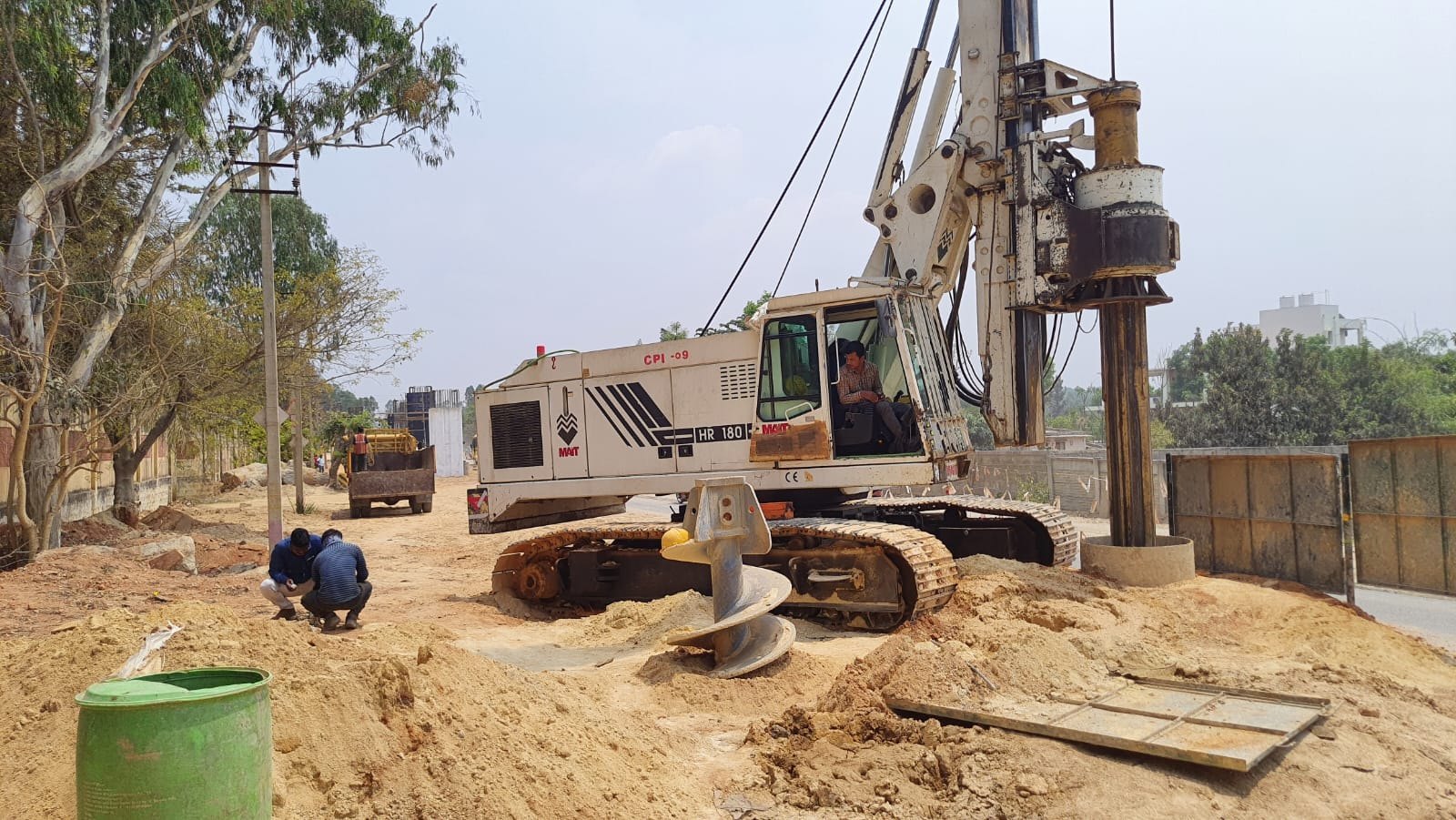
    Pile foundations are deep foundations that transfer structural loads to deeper, stronger soil layers
    or bedrock. They are widely used in bridges, high-rise buildings, industrial structures, and marine
    works in India. This article explores why pile foundations are necessary in Indian conditions and
    the multiple advantages they provide.
    What is a Pile Foundation?
    A pile foundation consists of long, slender members known as piles driven, bored, or cast into the
    ground to transfer loads. Piles can be made of concrete, steel, or timber, and they serve two
    primary purposes:
    1. End-bearing piles transfer load directly to hard strata or bedrock.
    2. Friction piles transfer load by skin friction along their surface when hard strata is too deep.
    Why Pile Foundations are Necessary in India
    1. Varying Soil Conditions
    India has diverse soil types:
    • Alluvial soils in the Indo-Gangetic plains are soft and compressible.
    • Black cotton soils in Maharashtra, Madhya Pradesh, and Gujarat swell during monsoons
    and shrink in dry seasons, causing instability.
    • Marine clays along coastal areas like Mumbai, Chennai, and Kolkata are weak and
    unsuitable for shallow foundations.
    • Desert soils in Rajasthan are sandy and prone to settlement.
    In such regions, pile foundations bypass the weak upper layers and transfer loads to stronger
    strata, ensuring stability.
    2. Urbanization and High-Rise Construction
    With rapid urbanization in cities like Mumbai, Delhi, and Bengaluru, demand for vertical growth
    has increased. High-rise buildings exert heavy loads that cannot be supported by shallow
    foundations on soft soils. Pile foundations are essential for such tall structures.
    3. Infrastructure Development
    India is investing heavily in infrastructure projects such as metro rail networks, flyovers, ports,
    and bridges. These structures often cross rivers, marshlands, or reclaimed land, where pile
    foundations are the only practical solution.
    4. Flood-Prone and Seismic Zones
    Large parts of India face floods (Assam, Bihar, Kerala) and earthquakes (Himalayan belt,
    Northeast). Pile foundations offer greater stability in flood-prone zones by anchoring structures
    deeper and resisting scour, while also improving seismic resistance by reducing differential
    settlement.
    5. Coastal and Marine Structures
    Ports, harbors, and offshore oil platforms in India require pile foundations since the seabed soil is
    usually weak. Piles resist lateral loads from waves, tides, and winds.
    Advantages of Pile Foundations in India
    1. Suitability for Weak Soils
    Pile foundations are highly advantageous in soft clay, loose sand, or expansive soils. Instead of
    depending on unreliable top layers, piles reach deeper, stable strata.
    2. High Load-Bearing Capacity
    Piles can carry very heavy loads sometimes thousands of tonnes. This makes them ideal for India’s
    high-rise residential towers, industrial plants, and metro structures.
    3. Resistance to Differential Settlement
    In heterogeneous soil profiles, shallow foundations may settle unevenly. Piles distribute loads
    more uniformly, reducing the risk of cracks and structural damage.
    4. Adaptability for Waterlogged Areas
    Many Indian cities, including Kolkata and Chennai, are prone to waterlogging. Piles can be driven
    through saturated soils without losing strength, unlike shallow footings.
    5. Durability
    Reinforced concrete and steel piles have a long life and can resist chemical attacks from saline
    soils in coastal belts such as Gujarat and Tamil Nadu.
    6. Flexibility in Design
    Piles can be grouped, spaced, or combined with pile caps to support various load configurations,
    from residential blocks to long-span bridges like the Bandra-Worli Sea Link.
    7. Seismic Performance
    In earthquake-prone areas like Gujarat and Northeast India, pile foundations improve
    performance by reducing amplification of ground vibrations and resisting lateral forces.
    8. Support for Offshore and Marine Structures
    Piles are essential in supporting India’s expanding port infrastructure, offshore wind farms, and
    oil platforms, where traditional foundations are not possible.
    9. Reduced Settlement in Reclaimed Land
    Cities like Mumbai and Kochi have reclaimed land for construction. Piles ensure minimal
    settlement in such unstable areas.
    Case Examples from India
    1. Bandra-Worli Sea Link, Mumbai
    This iconic bridge stands on pile foundations that resist strong currents, tidal forces, and soft
    marine soils of the Arabian Sea.
    2. Delhi Metro Rail
    Many metro piers stand on pile foundations, especially in areas with weak alluvial soils along the
    Yamuna River.
    3. High-Rise Towers in Mumbai
    Skyscrapers in Mumbai, built on reclaimed coastal land, rely heavily on pile foundations to
    prevent settlement.
    4. Port Infrastructure
    Major ports like Jawaharlal Nehru Port Trust (JNPT) and Chennai Port use pile-supported jetties
    and berths.
    Challenges and Considerations
    While pile foundations offer numerous advantages, they also come with challenges:
    • Cost: Piles are more expensive than shallow foundations.
    • Specialized Equipment: Requires heavy machinery like pile drivers and rigs.
    • Skilled Labor: Proper installation and supervision are essential.
    • Time: Piling is a time-consuming process compared to simple shallow foundations.
    Despite these challenges, the benefits outweigh the costs, especially in India’s difficult soil
    conditions.
    Future Outlook in India
    As India continues rapid urbanization and infrastructure expansion, pile foundations will remain
    central to construction:
    • Smart Cities: High-rise commercial and residential complexes will increasingly adopt
    piling.
    • Metro Rail Expansion: Piles will be indispensable in extending metro networks across
    Indian cities.
    • Renewable Energy: Offshore wind farms and solar parks in coastal belts will require pile
    supported structures.
    • Coastal Protection: With rising sea levels, pile foundations will be critical in building
    resilient coastal infrastructure.
    Conclusion
    Pile foundations are not just an engineering option but a necessity in many parts of India. The
    country’s varied soil conditions, increasing demand for high-rise buildings, expansion of transport
    and port infrastructure, and exposure to natural hazards make pile foundations the most
    dependable solution.
    Their ability to provide stability in weak soils, resist seismic and flood forces, and support massive
    loads gives them an unmatched advantage. Although they demand higher costs and technical
    expertise, their long-term benefits in safety, durability, and adaptability make pile foundations
    the backbone of modern construction in India.

  • Hello world!

    Welcome to WordPress. This is your first post. Edit or delete it, then start writing!

Call Now Button